
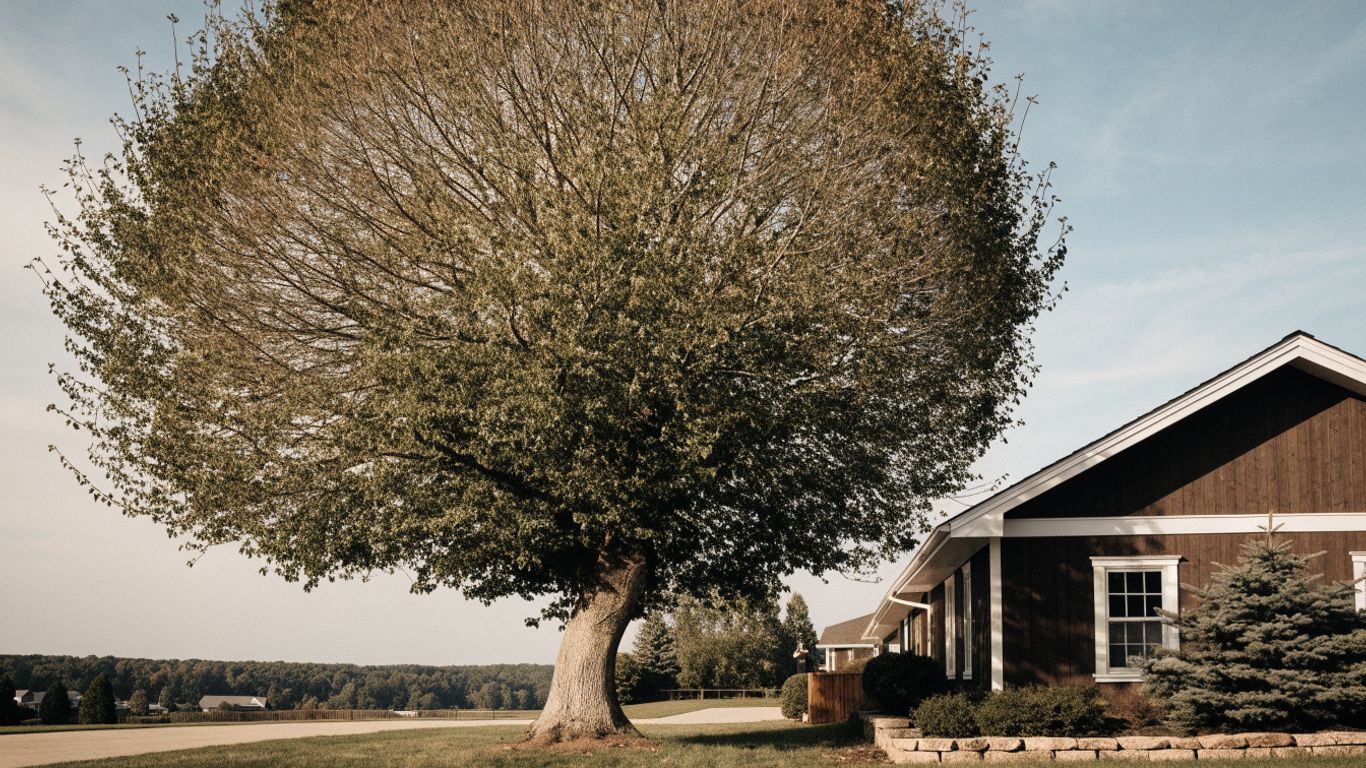
Knowing how to tell if a tree is dying helps you act before a weak limb lands on a roof, car or walkway, and sometimes early enough to save the tree. Most dying trees show warning signs long before they fail: dead branches, a thinning canopy, damaged bark, fungus at the base, or a lean that wasn’t there before. No single symptom proves a tree is dying. What matters is a pattern of several signs, especially signs that get worse from one season to the next.
Key Takeaways
- Several signs appearing together matter more than one odd branch or patch of bark.
- The scratch test shows whether a twig is alive, not whether the whole tree is healthy.
- Compare symptoms with the season before assuming the worst.
- Avoid fertilizing, heavy pruning or treatments until the cause is known.
- A new lean, large dead limbs or trunk decay near a home calls for a professional inspection.
10 Signs of a Dying Tree to Watch For
Start by looking at the whole tree: the canopy, the trunk and the ground around the base. Compare what you see with how the tree looked last year, or with healthy trees of the same species nearby. Most of the signs below can be spotted safely from the ground.
Dead Branches on the Tree That Don’t Leaf Out
A few dead twigs inside the crown are normal, because trees shed shaded inner growth as they mature. The warning sign is larger limbs that stay bare while the rest of the tree leafs out in late spring. Check whether the deadwood is scattered or concentrated on one side. One-sided dieback often points to root damage on that side of the tree. Dead branches are also a direct safety issue: dead wood dries out, becomes brittle and can drop on a calm day. Large dead limbs over a roof, driveway or play area should be dealt with promptly.
Thinning Canopy and Tree Dieback From the Top Down
Tree dieback usually begins at the branch tips and the top of the crown. Those parts are farthest from the roots and the first to go short of water when the roots are struggling. Stand back and compare the canopy with older photos or with similar trees nearby. Warning signs of ongoing stress are more sky visible through the crown each year, leaves smaller than normal, or a bare top while the lower branches still leaf out. Crown dieback that spreads year after year is one of the clearest signs of a dying tree.
Brittle Twigs That Snap Instead of Bend
Living twigs hold moisture and bend before they break. Dead twigs are dry and snap cleanly. Gently bend a few small twigs you can reach from the ground on different sides of the tree. If most of them snap and the wood inside is dry and grey or brown, those sections are dead. Test only small twigs. Never pull on large or overhead branches, which can break and fall. A steady scatter of fallen twigs under the tree after calm days is another clue.
Bark That Is Cracking, Peeling, or Falling Off
Some species, such as birch, shed thin layers of bark naturally, so peeling alone isn’t a diagnosis. Be concerned about bark falling away in large sections to expose bare wood, deep vertical cracks, or sunken, discoloured patches called cankers. Cankers are areas of dead bark, often caused by fungal or bacterial infection. Just beneath the bark is the tissue that carries sugars from the leaves down to the roots. Damage that circles most of the trunk, known as girdling, cuts off that supply and can kill everything above the wound.
Fungus at the Base of the Tree
Mushrooms or shelf-like growths, called conks or brackets, on the trunk, the roots or the root flare are the fruiting bodies of fungi that are often feeding on wood inside the tree. By the time conks appear, decay may already be well established in the roots or lower trunk, and the visible growth is only a small part of it. Mushrooms in nearby mulch are usually harmless. Fungus growing directly from the trunk, roots or root flare deserves attention, especially on a large tree near a building. Knocking the fungus off does not remove the decay.
Hollow Spots, Cavities, or Soft, Crumbly Wood
Trees wall off decay internally, a process known as compartmentalization (CODIT). That’s why many old cavities stay stable for years. The real question is how much sound wood remains around the hollow. Warning signs include wood that feels soft or spongy, cavities that are getting larger, sawdust-like debris or carpenter ants coming from openings, and hollows at the base or where large limbs attach. Don’t probe cavities with tools or climb the tree to inspect them.
Leaves Browning, Wilting, or Dropping Out of Season
Leaves are an early warning system. Browning edges, wilting during cool weather, unusually small or pale leaves, or leaves dropping in mid-summer can point to drought, root damage, pests or disease. Pay attention to the pattern. Symptoms across the whole canopy often point to a root or water problem, while symptoms on a few branches suggest trouble in those limbs. Brown leaves that stay attached in summer can mean a branch died suddenly. For evergreens, losing some older inner needles in fall is normal, but browning at the branch tips is not.
A New or Increasing Lean
Many trees grow with a lean and stay stable for decades because they add extra wood to support it. A lean that is new or getting worse is different, especially after a storm, heavy rain or digging nearby. Check the base. Cracked or raised soil on the side opposite the lean, exposed or snapped roots, or a gap between the trunk and the soil all suggest the root plate is shifting. Treat this as urgent: keep people, pets and vehicles out of the area where the tree could fall.
Damaged Roots or Heaving Soil Around the Trunk
Most of a tree’s roots grow in the top layer of soil and spread well past the edge of the canopy. Trenching, driveway or patio work, piling soil over the root zone, or driving heavy equipment near the tree can damage them. Canopy symptoms often don’t appear until a few years later. Look for cut or exposed roots, fungus on roots, heaving soil, a root flare buried under soil or mulch, or girdling roots wrapping around the base of the trunk.
Signs of Pests or Tree Disease
Watch for small exit holes in the bark, sawdust-like material (frass) at the base, sticky residue on leaves, woodpeckers working heavily on one tree, or oozing lesions on bark and branches. On ash trees, D-shaped exit holes are a sign of emerald ash borer. This invasive beetle has been detected in Nova Scotia and is regulated by the Canadian Food Inspection Agency. Many pests and diseases look alike, so get a correct identification before spraying or treating anything.
How to Tell If a Tree Is Dead: The Scratch Test
The scratch test is the quickest way to check for living tissue. Pick a small twig and gently scrape away a thin strip of outer bark with your thumbnail or a clean pocketknife. Just underneath is the cambium, the thin growing layer of the tree. If it is green and moist, that part of the tree is alive. If it is brown and dry, that section is dead.
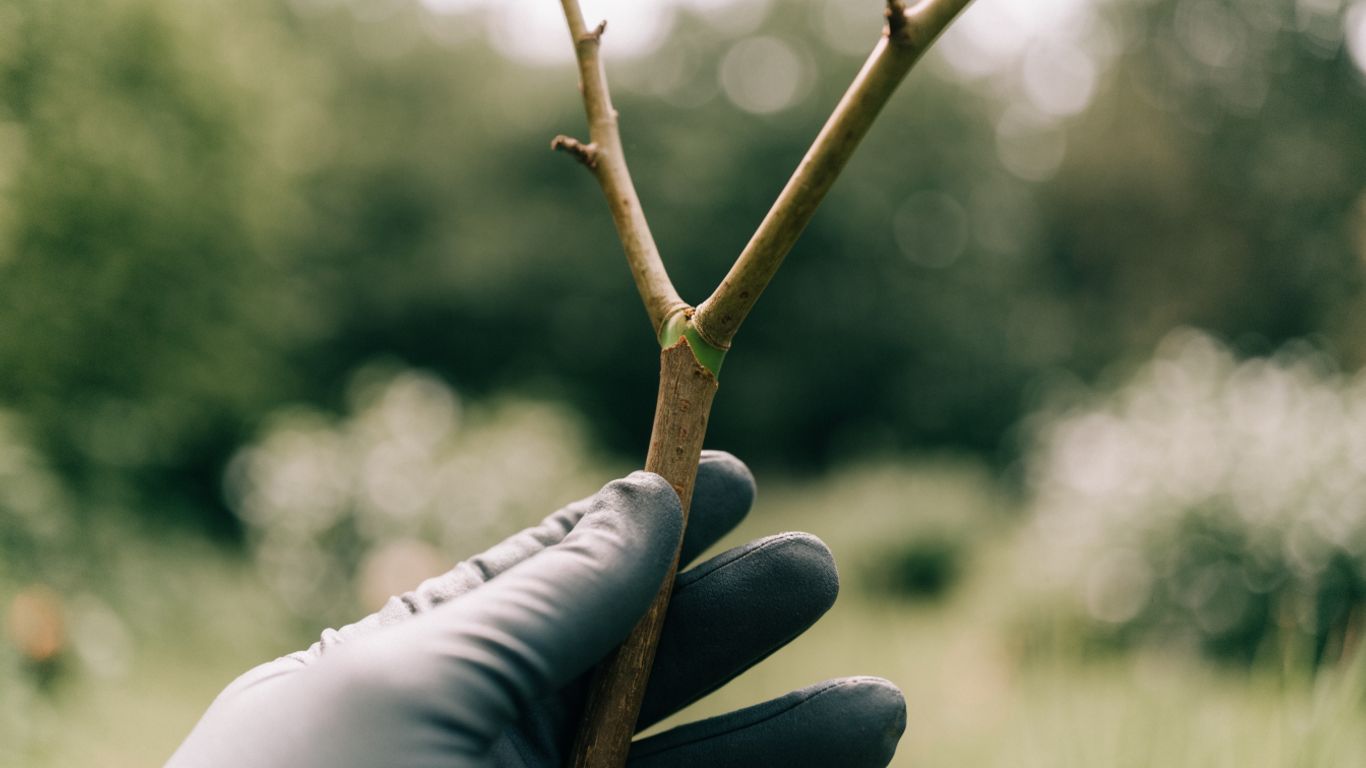
Test several twigs on different sides of the tree. If the tips are dead, move closer to the trunk and test again. A branch can die back partway while the rest of the tree stays alive. Avoid deep cuts on the trunk or major limbs, since any wound is an entry point for decay.
Keep in mind that a dormant tree in winter can look lifeless. Check the buds as well: plump, firm buds are a good sign, while dry, shrivelled buds that crumble are not. If you still can’t tell whether a tree is dead or dormant, have it inspected, especially if the tree is large and close to a home.
Common Dying Tree Symptoms by Season
A tree’s appearance changes through the year, so a normal seasonal change can look like trouble. Use this as a guide to what to watch for in each season:
| Season | What to watch for | What it may mean |
|---|---|---|
| Spring | Buds that fail to open, or leaves on only part of the tree | Dead branches or root problems |
| Summer | Wilting, scorched leaf edges, early leaf drop | Drought stress, root damage, pests or disease |
| Fall | Leaves changing colour or dropping weeks earlier than similar trees | Ongoing stress building up |
| Winter | Brittle twigs, bark damage, conks and cavities that are easier to see | Deadwood and structural defects |
Fall and winter are good times to inspect structure, because bare branches make cracks, cavities and deadwood easier to see. Take dated photos from the same spot each season. They make slow changes in the canopy or a growing lean much easier to notice.
What Causes a Tree to Start Dying?
Tree decline rarely has a single cause. Usually one stress weakens the tree and others follow. Common causes include:
Environmental stress: drought, waterlogged soil, compacted ground, and de-icing salt from nearby roads and driveways.
Physical damage: construction near the roots, lawn mower and string trimmer wounds at the base, storm breakage, and poor pruning such as topping.
Pests and disease: wood-boring insects, canker diseases and root rot fungi, which tend to attack trees that are already stressed.
Age: every species has a natural lifespan, and old trees lose vigour and the ability to wall off decay.
Look at what has changed around the tree as well as on it. A new driveway, a regraded yard or a change in drainage two or three years ago is often the reason a tree is struggling now.
How to Save a Dying Tree
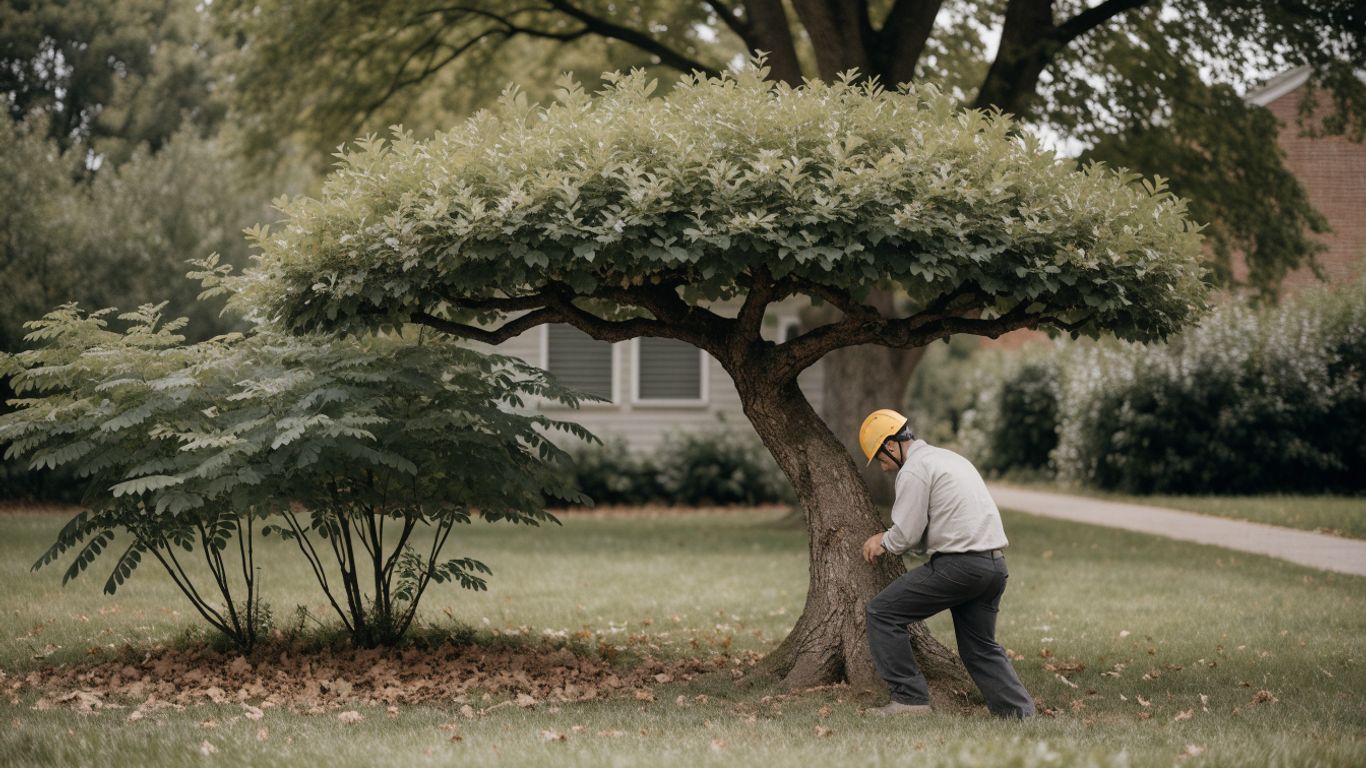
Whether a tree can be saved depends on the cause and how much of the tree is affected. A tree with some dieback from drought stress often recovers with good care. A tree with advanced root rot or a hollow trunk usually does not. These steps give a stressed tree the best chance:
- Water deeply during dry spells. A slow soak over the root zone is better than frequent light sprinkling.
- Mulch correctly. Spread 5–8 cm of mulch over the root zone and keep it a hand’s width away from the trunk. Never pile it up in a “volcano”.
- Remove dead and diseased wood. Proper tree trimming removes hazardous deadwood and reduces the spread of decay.
- Protect the root zone. Keep vehicles, building materials and heavy foot traffic off it, and avoid digging or changing the grade.
- Hold off on fertilizer. Fertilizing a stressed tree without knowing the cause can push new growth the roots cannot support.
Early action makes the biggest difference. Once dieback affects most of the canopy, or decay has reached the trunk or major roots, the options become limited.
When to Remove a Dying Tree
A declining tree doesn’t always need to come down. The decision depends on how weak the tree is and what it could hit if it fails. Removal is usually the safer choice when:
- More than half of the canopy is dead or dying.
- The trunk has large cavities, deep cracks or extensive decay.
- The tree has a new or worsening lean, or the root plate is lifting.
- Large dead limbs hang over a house, driveway, power line or play area.
- Decay fungi are growing from the base or the major roots.
Don’t try to remove a large or hazardous tree yourself. Dead wood is brittle and behaves unpredictably when cut, so professional tree removal is the safer option. If a cracked trunk or dead limbs are hanging over your roof, call for emergency tree removal and keep everyone clear. Once a dying tree is gone, planting a new tree in a better-suited spot restores shade and curb appeal.
What an Arborist Looks For When a Tree Seems to Be Dying
Much of what decides a tree’s safety is hidden inside the trunk or below ground, which is why a hands-on inspection tells you far more than a quick look from the yard. During an inspection, a tree care professional typically:
Checks the root collar, clearing soil or mulch if needed to look for girdling roots, decay or root damage.
Sounds the trunk with a mallet. A hollow sound can show internal decay that isn’t visible from outside.
Identifies decay fungi and pests, since some cause rapid structural failure and others are slow and manageable.
Reads the canopy to tell short-term stress from long-term decline.
Weighs the likelihood of failure against what is underneath, such as a house, a driveway or a spot where people gather.
The result is a clear recommendation: monitor the tree, prune it, treat it, or remove it. If you’re unsure about a tree, a tree health and risk assessment gives you that answer before a storm makes the decision for you.
Worried About a Tree on Your Property in the Annapolis Valley?
If you’ve spotted several of these signs, such as dead limbs, a thinning crown, fungus at the base or a new lean, don’t wait for the next windstorm to test the tree. Knotty Tree Care helps homeowners across Kings, Hants and Annapolis County work out whether a tree can be saved or needs to come down safely, with a full range of tree care services from trimming to removal. Book a free consult and quote and get a clear answer on the tree that’s been worrying you.
Frequently Asked Questions
Can a dying tree come back to life?
Sometimes. A tree stressed by drought, a harsh winter or minor root damage can recover if the cause is removed and the tree still has a healthy root system and enough living canopy. Deep watering, correct mulching and removing dead wood all help. A tree with advanced decay in the trunk or roots, or with dieback across most of the crown, rarely recovers, and it becomes more hazardous as it declines.
How long does it take for a tree to die?
It depends on the cause. Root damage from construction may take a few years to show in the canopy, and the decline can continue for several more. Invasive pests such as emerald ash borer can kill an ash tree within a few years of infestation. Sudden events such as severe storm damage or a girdling wound to the trunk can kill a tree within a single growing season.
Is a dying tree dangerous to keep near the house?
It can be. As a tree dies, its wood dries out and decays, and it becomes brittle and less able to handle wind, ice and snow. Dead branches can drop without warning, and a tree with root decay can fall whole. The risk depends on the tree’s size, its condition and what lies within reach. A large dying tree within falling distance of a home should be inspected as soon as possible.
Can you tell if a tree is dying in winter?
Yes, and winter is a good time to inspect a tree’s structure. Without leaves, deadwood, cracks, cavities, cankers and fungal conks are much easier to see. Check whether the buds are plump and firm, and do a scratch test on small twigs to look for green cambium. Leaf-related symptoms have to wait until spring, so it helps to recheck the tree once it leafs out.
Does a dead tree have to be removed right away?
A dead tree should not be left standing near people or property. Dead wood weakens every season, so branches and eventually the trunk become more likely to fail, especially in wind, ice and heavy snow. A dead tree within reach of a home, driveway, road or play area should be removed as soon as possible. Waiting also makes removal harder and riskier, because brittle wood is less predictable to cut and lower.